
Bitumen-based roofing systems protect buildings from water intrusion when the membrane, substrate, insulation, detailing and drainage are designed as a complete assembly. This guide updates and consolidates Global Synergy's original three-part roofing series, first published in August 2023.
What Is Bitumen Roofing?
Bitumen is a petroleum-derived waterproofing binder used in roofing sheets, coatings and modified-bitumen membranes. Modern membranes commonly incorporate reinforcing carriers and polymer modifiers. The suitability of any product depends on its tested performance and the roof specification, not on the binder alone.
Common Roofing Systems
APP-Modified Bitumen
Atactic polypropylene (APP) modification is often selected where heat resistance and dimensional stability are important. Installation method and product compatibility must follow the manufacturer's system instructions.
SBS-Modified Bitumen
Styrene-butadiene-styrene (SBS) modification improves elastic response and is widely used in flexible membrane systems. Actual low-temperature flexibility and aging performance depend on the formulation and tested grade.
Built-Up and Coated Roofs
Multi-ply built-up roofing and compatible bituminous coatings remain options for specified substrates and maintenance applications. Coatings should not be treated as a universal substitute for a failed membrane.
Installation and Critical Details
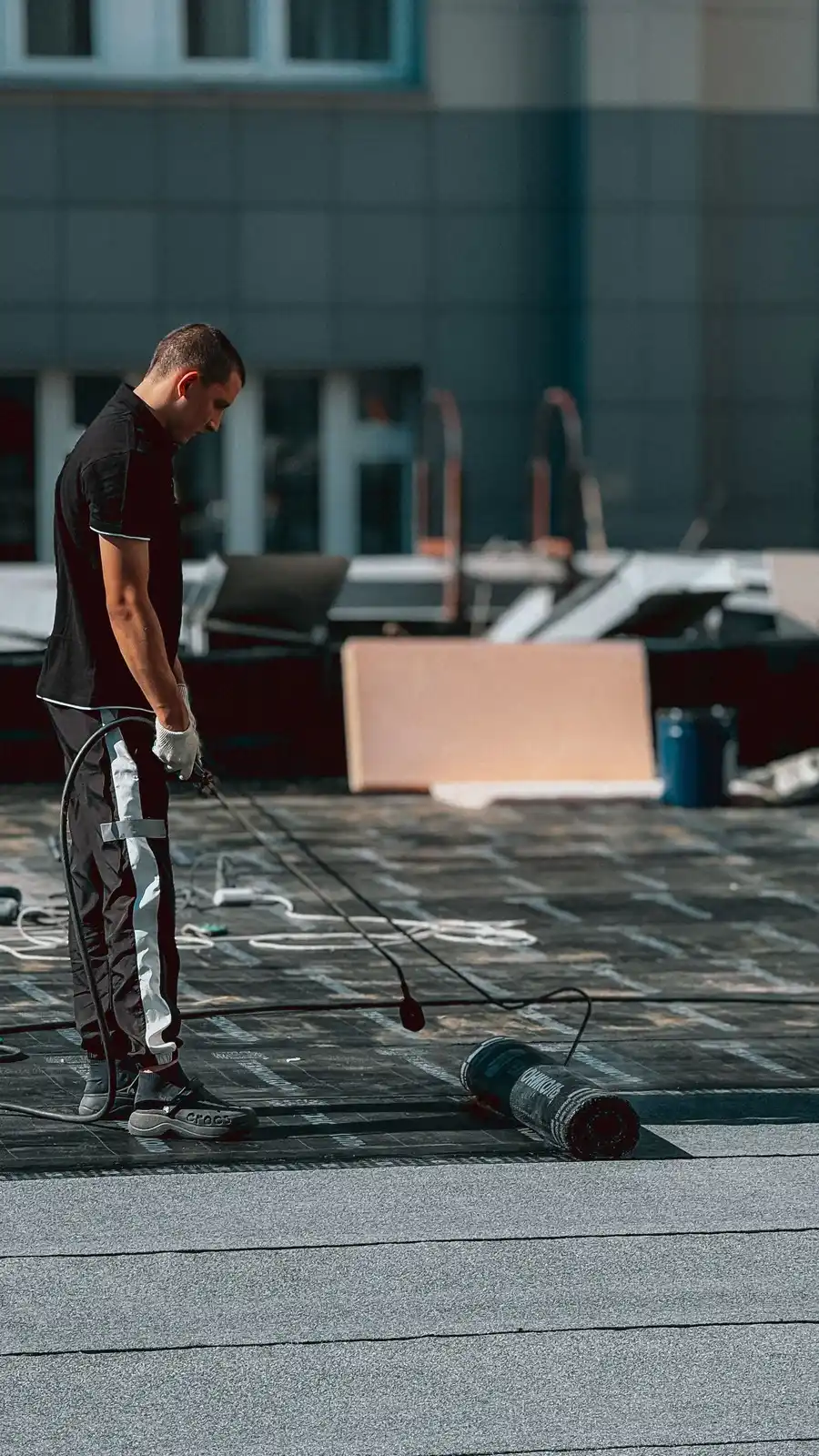
Successful work starts with a clean, dry and structurally suitable substrate, verified drainage falls, and compatible primers where required. Seams, parapets, penetrations, outlets and terminations need particular attention. Torch-applied systems require trained installers and appropriate fire precautions; self-adhesive and cold-applied alternatives have their own substrate and temperature limits.
Weather Resistance and Fire Classification
Roof performance depends on the complete tested assembly, including insulation and deck. Do not assume every bitumen roof has the same fire rating or ultraviolet resistance. Use local building codes and product test reports to establish suitability.
Maintenance and Lifecycle Cost
Inspect roofs periodically and after severe weather. Look for ponding, damaged seams, blocked drains, punctures and deteriorated flashing. Compare installed system cost, expected service conditions, inspection needs and repairability rather than choosing solely by initial material price.
Choosing a Bitumen Roofing Material
Before procurement, define the climate, substrate, roof slope, exposure, insulation arrangement, installation method, required standards and documentation. Request technical data sheets and applicable safety information for the specific system.
Frequently Asked Questions
Is bitumen roofing suitable for flat roofs?
It is widely used on low-slope roofs when drainage, detailing and system specifications are appropriate.
Is a bitumen roof automatically fire resistant?
No. Fire classification applies to a tested roof assembly, not every bituminous membrane.
How long does it last?
Service life varies with system design, climate, installation quality and maintenance. Obtain product-specific evidence instead of relying on a universal lifespan claim.
Related reading: Explore Global Synergy's bitumen products and waterproofing applications for broader material selection guidance.
Historical source: Global Synergy, “Roofing with Bitumen: Harnessing the Power of a Reliable Protector,” Parts 1–3 (15 August 2023). This is an updated, consolidated guide rather than a verbatim reproduction.
Roofing product selection and documentation
APP- and SBS-modified membranes are specified as tested manufactured products. Selection should address roof slope, substrate, climate, membrane reinforcement, joint details, installation technique and the complete roof assembly. A raw bitumen grade is not a substitute for an approved membrane specification.
For material background, see Bitumen Waterproofing and Oxidized Bitumen. Ask the roofing-system manufacturer for product-specific installation instructions, fire classification and performance documentation.